

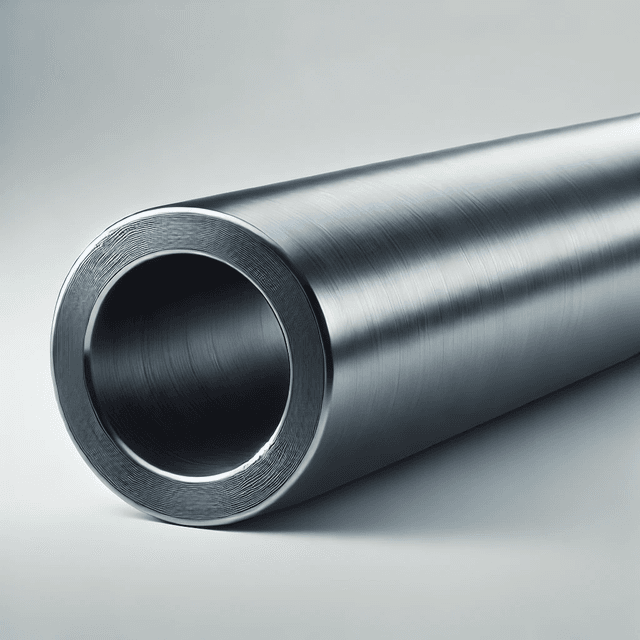
Enhanced martensitic stainless steel with superior hot working characteristics and reduced susceptibility to cracking during heat treatment.
Excellent forgeability and hot formability
Less susceptible to heat treatment cracking
NACE approved for packers and subsurface equipment
Better through hardening in thick sections
Enhanced properties over standard 410
| Property | 410 Stainless | 420 Modified | Improvement |
|---|---|---|---|
| Hot Working | Good | Excellent | Superior workability |
| Crack Resistance | Moderate | Good | Less susceptible during HT |
| Hardenability | Standard | Enhanced | Better through hardening |
| Weldability | Fair | Good | Improved with preheating |
| Machinability | Good | Good | Similar performance |
| Corrosion Resistance | Good | Good | Comparable performance |
Enhanced 13Cr Martensitic
| Element | Min | Max |
|---|---|---|
| Carbon(C) | 0.18 | 0.22 |
| Silicon(Si) | 0.25 | 1.00 |
| Manganese(Mn) | 0.25 | 1.00 |
| Phosphorus(P) | - | 0.020 |
| Sulfur(S) | - | 0.005 |
| Chromium(Cr) | 12.50 | 14.00 |
| Nickel(Ni) | - | 0.60 |
| Iron(Fe) | Balance | Balance |
Enhanced Processing
| Process | Temperature | Cooling |
|---|---|---|
| Annealing | 815-900°C (1500-1650°F) | Furnace cool |
| Hardening | 980-1040°C (1800-1900°F) | Oil quench |
| 1st Tempering | 620-650°C (1150-1200°F) | Air cool |
| 2nd Tempering | 620-650°C (1150-1200°F) | Air cool |
Hardened & Double Tempered Condition
| Condition | UTS | Yield | Elongation | CVN Impact | Hardness |
|---|---|---|---|---|---|
| Hardened & Double Tempered | 100 KSI Min | 80 KSI Min | 20% | 20 J @ -10°C | 22 HRC Max (NACE) |
| Environment | Suitability | Notes |
|---|---|---|
| Standard Environments | Excellent | Ideal for general oilfield applications |
| CO2 Environments | Good | Suitable for CO2 injection and processing |
| Low H2S | Limited | Restricted use in sour service |
| High Chloride | Fair | pH and chlorides can limit use |
| Elevated Temperature | Good | Temperature dependent on application |
| Atmospheric | Excellent | General atmospheric corrosion resistance |
Excellent forgeability and hot formability compared to 410
Reduced manufacturing costs and complex shapes
Less susceptible to cracking during heat treatment
Higher yield and improved quality
More uniform hardening in thick sections
Consistent properties throughout
Better welding characteristics with proper procedures
Fabrication flexibility
Basic martensitic grade with lower carbon
Enhanced martensitic with superior corrosion resistance
Precipitation hardening stainless steel
Leverage the enhanced hot working characteristics and reduced cracking susceptibility for your completion equipment and pressure containing applications.